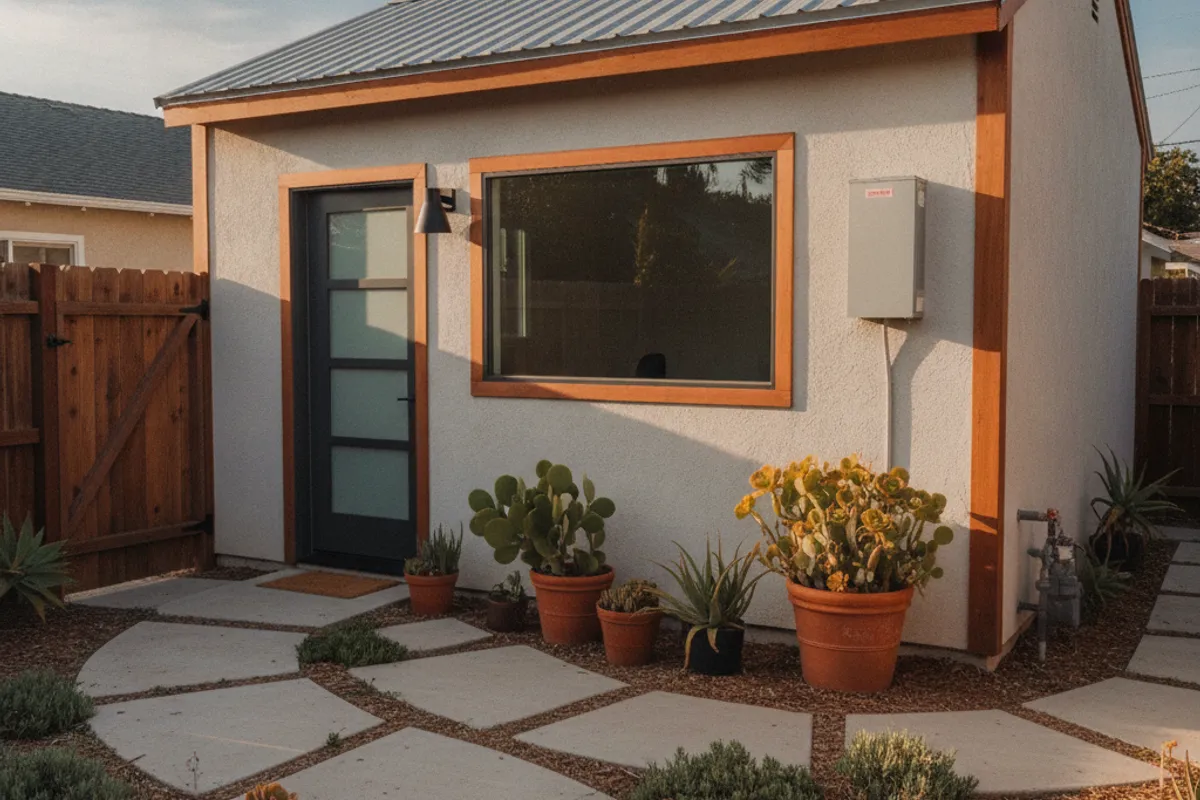
Converting a garage to an ADU in San Diego County
A garage ADU is a permitted independent dwelling created inside an attached or detached garage. This site does not publish rental income. If you want a rent opinion, ask a licensed manager for permitted comps at your address.
This guide covers the two legal products, the permit clock that is actually published, and how to hire without inventing a 9-18 month calendar.
What types of ADU can a garage become
California law recognizes three categories relevant to garage conversions.
Junior ADU (JADU): A JADU must sit inside a single-family residence. An attached garage counts. A detached garage cannot. City of San Diego size is 150 to 500 square feet. It needs its own exterior entrance and an efficiency kitchen. A private bathroom is not required. Owner occupancy depends on whether sanitation is shared. A recorded deed restriction bars selling the JADU apart from the house.
Attached ADU: An attached garage that is converted into a full apartment, including a full kitchen and full bathroom, becomes an attached ADU. Unlike a JADU, there is no 500 square foot cap; the unit can use the full garage footprint. State law as of 2020 generally requires jurisdictions to allow attached ADU conversions on single-family lots with minimal restrictions.
Detached ADU: A detached garage converted to a living unit becomes a detached ADU. Detached ADUs can be expanded with a modest addition (up to 150 square feet in some cases under state law) to add features like a bathroom or entry vestibule. Height limits and setback requirements vary by jurisdiction.
What state law changed for San Diego homeowners
Before 2020, many San Diego cities and the county imposed significant restrictions on ADUs: minimum lot sizes, owner-occupancy requirements, design standards that added cost, and parking replacement requirements that made conversions nearly impossible in dense neighborhoods.
AB 68, AB 881, and subsequent state legislation eliminated most of those barriers. Key changes that directly affect garage conversions:
Parking replacement is no longer required when a garage is converted to an ADU, attached or detached, and the rule doesn’t turn on how close the property sits to transit (Gov. Code 66314(d)(11)). The City of San Diego lists a Beach Impact area exception outside transit priority zones, so coastal parcels are worth confirming with Development Services.
Minimum lot sizes for ADUs cannot be enforced by local jurisdictions; state law overrides them.
Owner occupancy is forbidden as a local ADU rule. Cities can still require rentals of 30 days or longer. JADUs follow a different occupancy rule tied to sanitation sharing. Do not treat an ADU as a short-term rental until the current local rule is confirmed in writing.
Impact fees for an ADU of 750 square feet or less of interior livable space, and for a JADU of 500 square feet or less, are barred under state law. Plan-check, permit, connection, and school fees can still apply.
The permit process in the City of San Diego
The City of San Diego processes ADU permits through Development Services. State law gives the agency 60 days to decide a completed application. That clock starts when the packet is complete. This site does not publish a 4-8 month City average.
Steps in sequence:
Pre-application research. Confirm your lot’s zoning, setbacks, and any specific restrictions. The city’s Zoning Map and the development services portal at sandiego.gov/development-services are the starting points. Your contractor should do this before any plans are drawn.
Plan preparation. Your contractor or a draftsperson prepares architectural plans showing the proposed conversion: floor plan, electrical, plumbing, and energy compliance (Title 24). For a garage ADU, you will need a T24 energy compliance report showing insulation, windows, and mechanical systems meet current California Energy Code.
Plan check submittal. Plans go into the city’s portal or over the counter. Incomplete packets sit outside the 60-day decision clock. Corrections send you back through review.
Permit issuance and construction. Once plans are approved and fees paid, the permit is issued. Construction begins. Inspections are required at specific milestones: framing, rough plumbing, rough electrical, insulation, and final.
Certificate of Occupancy. After the final inspection passes, the city issues a Certificate of Occupancy (or Occupancy Certificate for ADUs). This is the document that makes the unit legal to rent.
Other cities in San Diego County follow similar processes but have their own fee schedules and timelines. Chula Vista, Santee, and El Cajon have each updated their ADU ordinances to align with state law, but the specifics differ. Work with a contractor who knows your specific jurisdiction.
What the build process looks like
A garage-to-ADU conversion has a predictable sequence once permits are in hand.
Demo and prep. The garage door is removed and the opening is framed in with insulated walls, a door, and windows. Concrete is cut for plumbing rough-in if the bathroom and kitchen are not located along an exterior wall with easy access.
Rough framing and subfloor. If the garage slab is at grade (lower than the exterior finished floor), a sleeper system or raised subfloor is built to bring the interior floor up to code height and provide insulation from the cold slab. Interior partition walls are framed.
Mechanical rough-in. Plumbing, electrical, and HVAC are roughed in before walls are closed. The city inspector visits to confirm rough work meets code before drywall goes up.
Insulation and drywall. Exterior walls are insulated to Title 24 requirements. Drywall is hung and finished.
Finishes. Flooring, cabinetry, tile, paint, fixtures, and appliances go in. Electrical devices and covers are installed.
Final inspection. City inspector confirms everything matches the approved plans. A Certificate of Occupancy is issued.
Construction time after the permit is issued is set by the licensed pro from the approved plans and the site. This site does not publish a 3-6 month construction average.
What to look for in a contractor
ADU conversions in California require a contractor with an active license from the Contractors State License Board (cslb.ca.gov). For a project that includes plumbing and electrical, you want a general contractor (B license) who coordinates trade subcontractors, or one who holds the specialty licenses themselves.
Verify any contractor’s license at cslb.ca.gov before signing a contract. Check that the license is active, that the contractor carries general liability insurance (ask for a certificate naming you as additional insured), and that they have workers’ compensation coverage.
For a referral to insured local crews who handle garage-to-ADU conversions across San Diego County, visit the garage conversion service page or contact us at (858) 400-4935.
Does California require parking replacement when I convert my garage to an ADU?
No. California law bars local agencies from requiring replacement parking when an attached or detached garage becomes an ADU. This rule doesn’t depend on transit proximity. The City of San Diego still lists a Beach Impact area exception outside transit priority zones. For coastal parcels, confirm the current rule with Development Services.
Can I convert a detached garage to an ADU in San Diego?
Yes. Detached garages can be converted to ADUs on single-family lots throughout San Diego County. Setbacks, height limits, and specific design requirements vary by jurisdiction, but state law limits local restrictions significantly.
How long does it take to get an ADU permit in San Diego?
State law gives the agency 60 days to decide a completed application. Construction time is set by the licensed pro after the permit is issued. This site does not publish a 9-18 month total.
Do I need to owner-occupy my home to build a garage ADU?
A local agency cannot impose owner occupancy on a standard ADU. Cities can still require rentals of 30 days or longer. JADU occupancy depends on whether sanitation is shared.
For a full breakdown of what a garage-to-ADU project involves, see our full ADU conversion service page.