The finish question sits above the subfloor decision
Most garage conversion guides cover the structural subfloor, the sleeper-and-plywood system that raises the interior floor level up from the slab to living-space height. That’s the foundation, but it’s not the finish. Once the subfloor is in, you still have to pick what actually goes on top, and for a home office or gym conversion that wants to keep some of a garage’s practical, easy-clean character rather than look like a bedroom, the options are different than for a full ADU bedroom conversion.
Epoxy coating
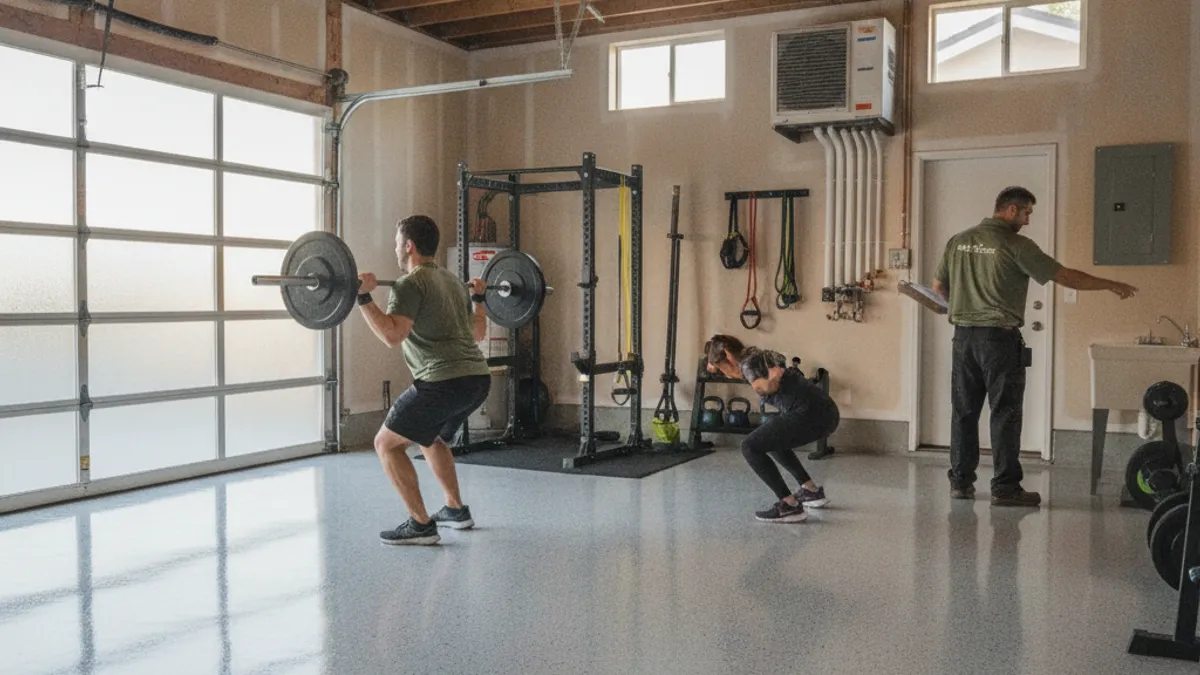
Epoxy is a legitimate finish for a gym or flex room. It is durable and easy to wipe down. Comfort and warmth are the tradeoff. This site does not publish a per-square-foot epoxy price. The published flooring band is $4,000-$12,000 on the flooring service page.
The tradeoff is comfort and warmth. Epoxy is a hard, cold surface, fine for a gym with rubber mats layered on top but less pleasant underfoot in a home office used barefoot. It also needs the subfloor beneath it prepped correctly, since epoxy applied over a substrate with moisture issues can bubble or delaminate.
Luxury vinyl plank (LVP)
LVP is the usual residential look with practical durability. It handles moisture better than hardwood. The licensed floor crew prices the product and labor from the slab and the approved plans.
Rubber gym flooring
For a dedicated gym, rubber tiles over a finished subfloor absorb impact and are easier to replace in sections. This site does not publish a rubber-tile price.
Carpet and standard flooring, for the home office case
If the space is a home office, carpet, laminate, or engineered hardwood can blend with the house. They are a different product than gym flooring. Ask the crew to price them as named lines.
Polished concrete, an option worth a mention
If the existing slab is sound, polishing it can skip a coating. Oil stains and cracks change that. This site does not publish a polish price.
What San Diego’s climate means for the choice
San Diego’s dry climate is generally kind to flooring choices, without the humidity swings that cause problems for wood-look products in more humid regions. The bigger local factor is the slab itself. Many San Diego garages, especially in older tract-home neighborhoods, were poured without a vapor barrier the way a habitable room’s slab typically is. Confirm moisture conditions at the slab before committing to a finish, since some products handle a damp subfloor better than others, and a moisture test is a small cost against the risk of a flooring failure a year or two in.
Is epoxy or LVP better for a garage conversion gym?
Epoxy is more purpose-built for heavy equipment and easy cleanup but colder and harder underfoot. LVP is more comfortable and residential-feeling with slightly less impact resistance. Many gym conversions use epoxy as the base with interlocking rubber tiles layered over the specific equipment area.
Do I need to test for moisture before choosing a floor finish?
It’s worth doing, especially in an older garage slab without a vapor barrier. A simple moisture test before finish selection avoids picking a product that will fail against ongoing dampness coming up through the slab.
How much does garage conversion flooring typically add to the project?
Use the published $4,000-$12,000 flooring band, then get a written proposal for the product you picked. Slab moisture work, if needed, is extra and must be on the bid.
Can I install garage gym flooring myself?
Interlocking rubber tiles are the most DIY-friendly option and don’t require adhesive in most residential setups. Epoxy and LVP installation are better left to a professional, since prep work and application technique affect how long the finish lasts.
For flooring recommendations that match your specific conversion plan, see our flooring page or call (858) 400-4935.
Garage Convert SD connects San Diego homeowners with experienced, insured crews for garage conversions and finish work. Call (858) 400-4935 to get matched with a crew that does this work.