The part of the budget most homeowners forget to ask about
Most garage conversion cost estimates mention “restoring street-facing aesthetics” in a single line and move on. That’s the exterior work needed once the garage door opening gets framed in, insulated, and finished to match the rest of the house, and it’s a bigger and more visible part of the project than the one-line summary suggests. Get this wrong and you have a home with an obvious patch on the front elevation, no matter how nice the interior conversion turned out.
Why stucco is the common case, and the tricky one
Most San Diego homes are stuccoed, and stucco is where exterior matching gets genuinely difficult. Stucco color and texture both shift with age, sun exposure, and the specific batch and application method used decades ago. A perfectly executed patch using today’s stucco materials can still read as a visible rectangle on the facade if the color and texture aren’t a close match, especially in direct afternoon sun where texture differences cast shadows.
There are two approaches. The first is a targeted patch: frame in the opening, match stucco or siding as closely as the existing product allows, then blend the edges. That can still show a seam. The second is recoating or re-siding a larger field so old and new finish as one. This site does not publish patch or elevation prices. The licensed pro prices the match from the house, not from a website.
Siding and other exterior materials
Homes with wood, fiber cement, or vinyl siding match by product profile, not by a hand-applied texture. If the product is discontinued, a whole-elevation re-side is sometimes cleaner than a near-match patch. The licensed pro prices that from the existing material.
Windows instead of a blank wall
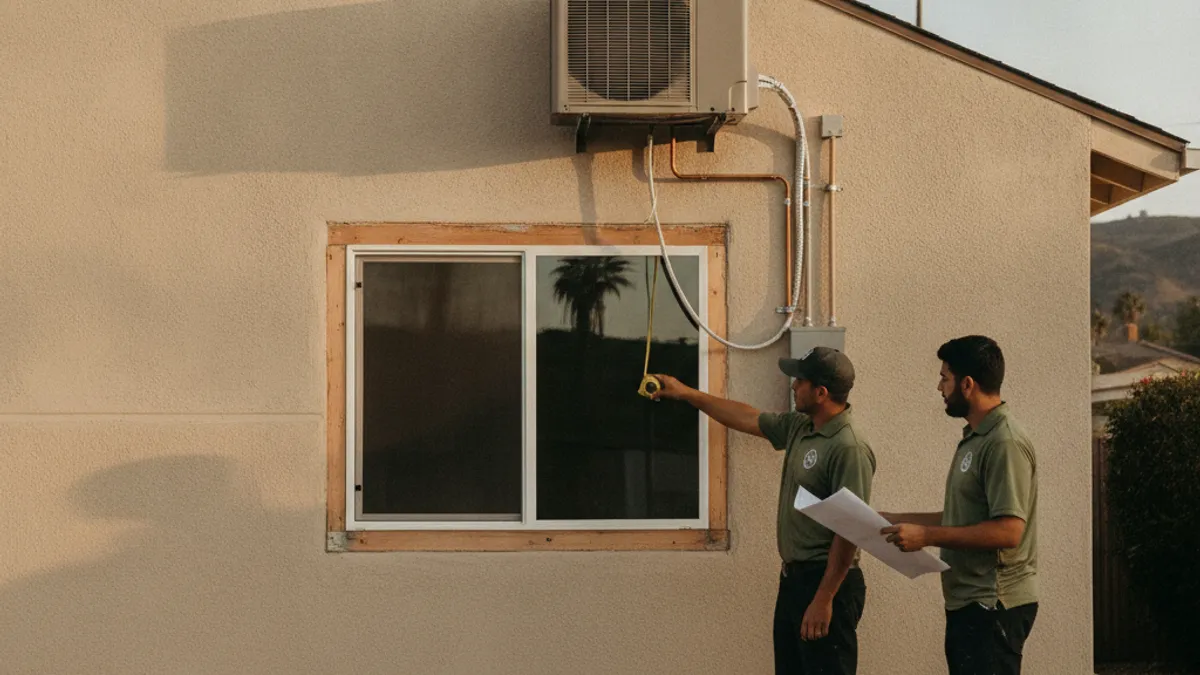
Filling the opening with a plain wall isn’t the only option. Many garage conversions add one or two windows where the garage door used to be, which serves two purposes: it brings natural light into the new living space and it reads visually as an intentional design choice rather than an obviously converted garage. Adding windows during the framing stage costs less than adding them after the wall is already finished, so this is a decision worth making early, not as an afterthought once the exterior patch is done.
What HOAs and design review can add to the project
Some San Diego neighborhoods, particularly planned communities in North County and parts of Carmel Valley and 4S Ranch, have HOA architectural guidelines covering exterior changes, including garage door removal. Requirements and review processes vary by community and change over time. If your home is in an HOA, confirm what design review or approval process applies to your specific project before finalizing exterior plans, since a rejected design after work has started is a costly problem to fix.
Timing the exterior work around the interior schedule
Exterior finish work doesn’t have to wait until the interior is fully done, and in most projects it shouldn’t. Framing in the garage door opening happens early, as part of the structural phase, since the interior insulation and drywall crew needs a sealed, weathertight shell to work behind. The stucco, siding, or paint finish typically follows a few weeks later, once the framing has settled and any final trim details around windows, if you’re adding them, are set. Scheduling the exterior finish crew too early, before the framing is fully locked in, risks having to redo texture work if window placement or trim details shift.
Paint matching, the smaller but still real detail
Even a perfect texture and material match needs the final paint coat to blend with the rest of the house, and exterior paint fades unevenly over years of San Diego sun exposure. A full repaint of the affected elevation, sometimes the whole house, is often the more reliable path to a uniform, matched look rather than trying to color-match old, sun-faded paint with a small touch-up can. Paint sheens also fade differently by exposure, so a south or west facing wall that’s taken the brunt of the afternoon sun for a decade rarely matches a shaded side wall well enough for a small touch-up to disappear.
How much does it cost to fill in a garage door opening and match the exterior?
The licensed pro prices the infill and the match from the house. This site does not publish a patch or re-coat range. Compare a targeted patch to a larger re-coat as two written scopes.
Will filling in my garage door hurt my home’s curb appeal?
Not if it’s planned well. Adding windows where the door used to be, matching material and paint carefully, or committing to a full re-coat all produce a finished look that reads as intentional rather than converted. A rushed patch job is what creates the “obviously converted garage” look homeowners want to avoid.
Do I need HOA approval to remove my garage door?
Some communities require design review for exterior changes including garage door removal. Confirm your specific HOA’s current requirements before finalizing your exterior plan.
To plan the exterior finish work for your garage conversion alongside the interior build-out, see our garage door replacement with wall page or call (858) 400-4935.
Garage Convert SD connects San Diego homeowners with experienced, insured crews for garage conversions and exterior finish matching. Call (858) 400-4935 to get matched with a crew that does this work.