A garage ADU in San Diego County does not automatically need its own electrical panel or a separate utility service. The licensed electrician sizes the work from the existing service, the proposed equipment, and a load calculation on the permit plans. Ramona is the County example here because unincorporated parcels go through County Planning and Development Services, not City of San Diego Development Services. We could not confirm a Ramona-only rule that forces one panel layout.
The published electrical-and-HVAC market band on this site is $8,000-$25,000 on the electrical and HVAC service page. That is a whole-job trade range, not a panel quote from Garage Convert SD.
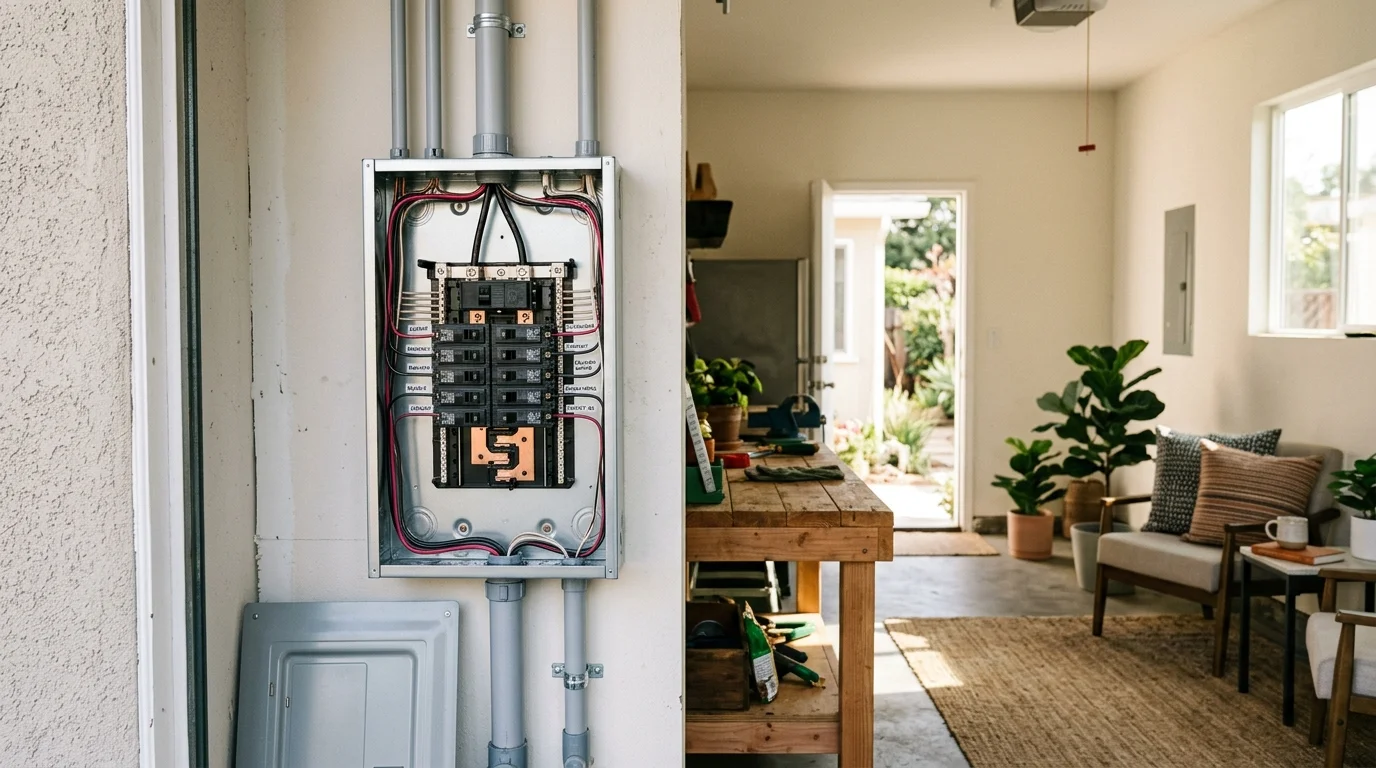
What the existing garage circuit was built for
An existing garage circuit only tells part of the story. It may serve lights, receptacles, a door opener, or equipment left by a former owner. That doesn’t establish whether it can support a legal dwelling conversion.
Start with what can be documented. The contractor should locate the garage circuits, identify their source, and inspect the existing panels. The review should also capture conductor routes, installed equipment, and any permit records available for past electrical work. Labels help, but they shouldn’t replace a field inspection.
A breaker marked “garage” may supply more than the garage. A detached structure may also have wiring that was altered after its original construction. If the route or purpose can’t be confirmed, it should remain an open item until a qualified professional traces it.
A garage ADU introduces a different equipment list. Lighting and receptacles are only the beginning. The plans may include cooking equipment, water heating, space conditioning, ventilation, and bathroom loads. The proposed design needs to account for the actual products being installed.
Ramona is an unincorporated San Diego County community, so County Planning and Development Services handles the building permit. The County says an ADU needs a building permit. California’s ADU guidance also states that conversions remain subject to applicable dwelling standards. An old garage circuit doesn’t bypass that review.
Subpanel versus a separate service
A subpanel is a distribution panel supplied from the property’s main electrical service. It can organize the ADU’s circuits without creating a separate utility service. A separate service is a different utility connection, with metering handled through that utility arrangement.
Those choices aren’t interchangeable. They also shouldn’t be selected from a photo or a general rule found online. We couldn’t verify a County rule saying every Ramona garage ADU must receive either arrangement.
A subpanel design still depends on the existing service and proposed load. The plans must identify where the panel will go, how it will be supplied, and which ADU equipment it will serve. Space in the existing panel doesn’t settle the issue by itself.
A separate service brings another party into the decision. The serving electric utility sets its own service and metering conditions. The County reviews the permitted building work, but it doesn’t replace the utility’s review of a proposed connection.
Tell the designer how the space will function before the panel layout is finished. A studio with electric cooking has a different equipment schedule from a bedroom conversion without a kitchen. Future equipment shouldn’t be treated as an afterthought either.
Our page on electrical and HVAC for conversions explains how those trades fit into a larger garage project. Garage Convert SD refers homeowners to licensed, independent local pros. It doesn’t design circuits, install panels, or perform electrical work.
Load calculations decide, not opinions
The useful question isn’t whether the panel “looks full.” The licensed electrical professional needs to evaluate the documented service and the loads connected to it. That review gives the project team a basis for choosing a feeder, subpanel, service change, or separate-service request.
The approved sources don’t provide one universal electrical capacity for Ramona garage ADUs. We won’t invent one. The answer depends on the existing home, the ADU plans, and the selected equipment.
A useful project record includes the service information, existing panel schedules, and major electrical equipment already serving the house. It should also identify each proposed ADU appliance by actual product data. Placeholder descriptions such as “electric range later” leave an important part of the design unresolved.
Two similar garages can produce different electrical plans. One house may already have several large electric appliances. Another may have a different mix of equipment. The distance between the main panel and garage can also affect the proposed installation.
Have the contractor document these conditions before finalizing the electrical scope. If the equipment changes, the electrical design may need another review. That includes changes made during purchasing, not only changes drawn by the architect.
The County permit process addresses the ADU as a complete dwelling project. Electrical work must fit the architectural, mechanical, and plumbing plans. A panel decision made without those documents is still preliminary, even when the proposed location seems straightforward.
Where the heat pump and the range change the math
Heat pumps and electric ranges belong in the electrical discussion early. Each selected product adds its own electrical information to the plans. There isn’t a defensible generic circuit size that applies to every model.
Start with the space-conditioning approach. The plans should identify the actual heat-pump equipment or a clearly defined design selection. Indoor and outdoor components need to match the electrical documents. If the product changes, the designer should check the electrical scope again.
Cooking equipment creates the same issue. A gas range, an all-electric range, and separate electric cooking appliances don’t present the same equipment schedule. The final choice needs to appear in the project documents. “Kitchen appliances by owner” isn’t enough detail for a settled panel decision.
Water heating can change the picture too. A garage ADU with electric water heating needs that selected equipment included in the review. The contractor should also coordinate it with the plumbing plan and available installation space.
These selections affect more than panel planning. They influence equipment placement, wall space, conduit routes, and the order in which trades work. Our guide to electrical and HVAC conversion cost factors explains the scope decisions without publishing unsupported construction prices.
Choose equipment before ordering panel work when possible. If a product isn’t selected, ask the designer what exact information is still needed. That keeps an allowance or placeholder from becoming an unexamined assumption.
Separate meters and what state law says about connection fees
A separate ADU meter may appeal to an owner planning long-term rental use. That preference doesn’t prove that a separate service is required or available. We couldn’t confirm a Ramona-specific metering rule in the approved County sources.
California law addresses utility connections for certain conversion ADUs. For an ADU contained within an existing residence or accessory structure under the conversion category, a local agency generally can’t require a new or separate utility connection or impose the related connection fee. The approved ledger notes exceptions involving construction with a new single-family dwelling and separate conveyance.
That rule isn’t a promise of zero project fees. Connection fees, capacity charges, impact fees, permit fees, and plan-review charges aren’t all the same thing. No verified Ramona electrical connection amount appears in the approved sources, so homeowners should request current written information from the agency or utility that sets the charge.
The current California ADU law chapter provides the governing state language. Ask the County to confirm whether the proposed project fits the conversion category before relying on that provision.
If you want separate metering, contact the serving electric utility during design. Ask what application, equipment location, and service information it requires. Keep that answer separate from the County’s building permit comments.
Don’t let a billing preference quietly become a construction assumption. The panel arrangement, utility connection, and meter setup should agree across the utility documents and permit plans before installation begins.
Rural and long-run considerations
A detached Ramona garage may sit well away from the home’s main panel. When that’s true, the measured route becomes part of the electrical design. The contractor should document the full path instead of estimating it from an aerial image.
Show where the route starts and ends. Mark buildings, driveways, walls, gates, slopes, and existing underground improvements that could affect access. Don’t assume an old conduit is reusable until its route and condition are confirmed.
We couldn’t verify a universal conductor or raceway specification for long Ramona garage runs in the approved ledger. Those details must come from the measured distance, selected equipment, field conditions, and permitted electrical design. Generic online diagrams aren’t a substitute for that project-specific work.
Rural parcels can add coordination points. San Diego County says permit site plans for properties with wells and onsite wastewater systems will be rejected if those locations aren’t shown. That isn’t an electrical sizing rule, but it matters when the team is planning an underground route.
Existing powered well equipment should also be identified during the service review. The electrical professional needs an accurate picture of equipment already connected to the property, not just the circuits planned for the ADU.
The County also directs applicants to coordinate residential plans with the fire authority having jurisdiction. Keep that review aligned with exterior equipment locations and the full site plan. Don’t move an approved route or panel location without checking how the change affects the other documents.
Our Ramona garage conversion service page covers the local referral process. A site visit gives the matched contractor the information needed to separate confirmed conditions from assumptions.
Frequently asked questions
Does a garage ADU need its own electrical panel?
No. Many conversions use a subpanel fed from the house service. A separate service and meter is a utility choice, not a default County or City rule we could confirm. The load calculation on the permitted plans decides whether a subpanel, a service change, or a utility request is in scope.
Can a local agency require a new utility connection on a conversion ADU?
For an ADU created inside existing residential or accessory space under Government Code section 66323(a)(1), a local agency generally cannot require a new or separate utility connection or the related connection fee. That is not a promise of zero permit or plan-check charges. Ask the reviewing department and the serving electric utility to classify the project in writing.
How much does garage-conversion electrical work cost in San Diego County?
The published market band for electrical and HVAC together is $8,000-$25,000. It is not a Garage Convert SD quote and it is not a panel-only line item. The licensed electrician’s written proposal is the price after the existing service and proposed equipment are documented.
When to call us
Call when a San Diego County garage conversion needs coordinated electrical planning, equipment selection, and permit-ready work from a licensed Garage Conversion / ADU pro. Garage Convert SD matches you with an independent local professional who performs the work.
Call (858) 400-4935. The number plays a recording-consent notice and records both sides. If nobody picks up, use the contact form.